Committed to Improving Quality of Life
Sustainable sourcing is at the core of what we do.


Vitasterol S-80® is Kensing’s plant sterol solution designed for dietary supplements, functional foods, and pharmaceutical applications. Available in multiple concentrations and formats, including high-purity, esterified, and water-dispersible options, it enables the development of products supporting cardiovascular health and evidence-based cholesterol management.

Vitasterol S-80® offers flexible formulation formats, including high-purity powders and prills, esterified options, and water-dispersible powders. Plant sterols have been extensively studied for their role in lowering LDL cholesterol and supporting cholesterol management. A daily intake of 1.5–3 g of plant sterols has been shown to lower LDL cholesterol by 7–12.5%, depending on the dose.1
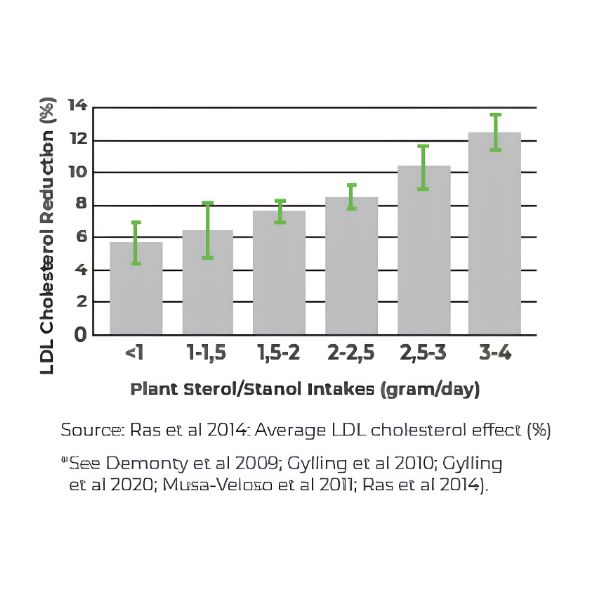
Plant sterols are among the most extensively studied ingredients for cholesterol management. Scientific evidence consistently demonstrates their ability to lower LDL cholesterol at appropriate intake levels.1
1. Maintenance of normal cholesterol
2. Cholesterol reduction
Foods with added plant sterols
Heart Health
Disclaimer: This information is intended for industry professionals. Claims on finished products are the responsibility of the brand owner and must comply with the regulations of each target market.
References
Demonty I, Ras RT, van der Knaap HCM, Duchateau GSMJE, Meijer L, Zock PL, Geleijnse JM, Trautwein EA. Continuous dose-response relationship of the LDL-cholesterol-lowering effect of phytosterol intake. Journal of Nutrition. 2009;139(2):271-284.
Musa-Veloso K, Poon TH, Elliot JA, Chung C. A comparison of the LDL-cholesterol lowering efficacy of plant stanols and plant sterols over a continuous dose range. Lipids in Health and Disease. 2011;10:230.
Ras RT, Geleijnse JM, Trautwein EA. LDL-cholesterol lowering effect of plant sterols and stanols across different dose ranges: a meta-analysis of randomised controlled studies. British Journal of Nutrition. 2014;112(2):214-219.
Gylling H, Plat J, Turley S, et al. Plant sterols and plant stanols in the management of dyslipidaemia and prevention of cardiovascular disease. Atherosclerosis. 2014;232(2):346-360.
Gylling H, Simonen P. Phytosterols, phytostanols, and lipoprotein metabolism. Nutrients. 2015;7(9):7965-7977.
² EFSA Panel on Dietetic Products, Nutrition and Allergies (NDA). Scientific Opinion on the substantiation of a health claim related to 3 g/day plant sterols/stanols and lowering blood LDL-cholesterol and reduced risk of (coronary) heart disease pursuant to Article 19 of Regulation (EC) No 1924/2006. EFSA Journal. 2012;10(5):2693.
Commission Regulation (EU) No 432/2012; Commission Regulation (EU) No 384/2010; Commission Regulation (EU) No 686/2014; Commission Implementing Regulation (EU) 2017/2470.
³ 21 CFR §101.83. Health claims: plant sterol/stanol esters and risk of coronary heart disease (CHD).
FDA. Health Claim; Phytosterols and Risk of Coronary Heart Disease. Proposed rule. Federal Register. 2010;75(235). December 8, 2010.

Vitasterol S-80® supports the development of plant sterol supplements such as capsules, tablets, powders, gummies and other supplement formats for cardiovascular health and cholesterol management. High-purity and dispersible grades provide flexibility according to the intended format, serving size and formulation requirements.

Vitasterol S-80® can be incorporated into functional foods and beverages, including dairy products, plant-based drinks, fat spreads, dressings, sauces and selected bakery applications. The most suitable grade should be selected according to the food matrix, processing conditions and regulatory requirements.
Download the Vitasterol S-80® product catalog to explore available grades, technical specifications and application opportunities for cardiovascular health and cholesterol management.
Our technical and commercial teams can help you identify the most suitable plant sterol solution for your application, formulation and target market.
Sustainable sourcing is at the core of what we do.
