




Committed to Improving Quality of Life
Sustainable sourcing is at the core of what we do.


Kensing’s new grades of biosurfactants, Regenyl™ and Revolis™, are surface-active ingredients entirely made by upcycling waste feedstocks.
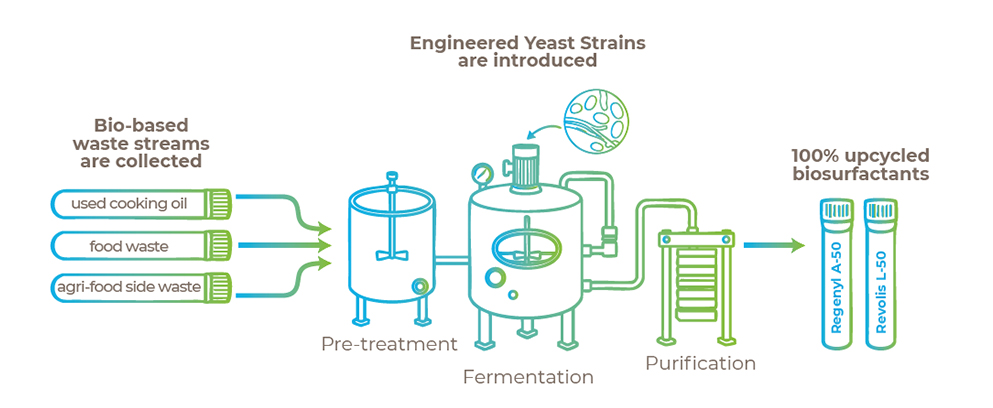
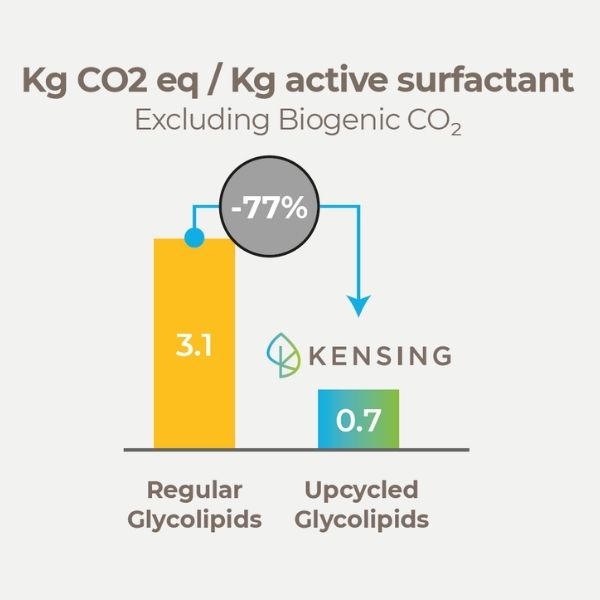
These surface-active agents are produced through fermentation, thanks to an expert control of microorganisms, extraction, and purification. Thanks to the integration of waste feedstocks, the environmental impact of our palm-free, low-carbon, high-purity biosurfactants is significantly lower than that of competitors’ products made using virgin feedstocks.
The cleaning industry is at a critical juncture. Regulators, customers, and investors are pushing for meaningful reductions in environmental impact while maintaining performance and cost competitiveness. Scope 3 emissions dominate, and 2030 timelines leave little room for incremental change.
Simple feedstock substitution is insufficient: replacing palm oil with other virgin crops increases land use and shifts, rather than reduces, the burden. Even when fatty chains are more sustainably sourced, petrochemical intermediates remain necessary in conventional surfactant production and continue to drive a significant share of the carbon footprint.
True decarbonization, therefore, requires addressing the full molecular footprint.
Upcycled biosurfactants, derived from waste-based feedstocks, are Kensing’s answer: a differentiated pathway to help the industry meet its ambitious targets.
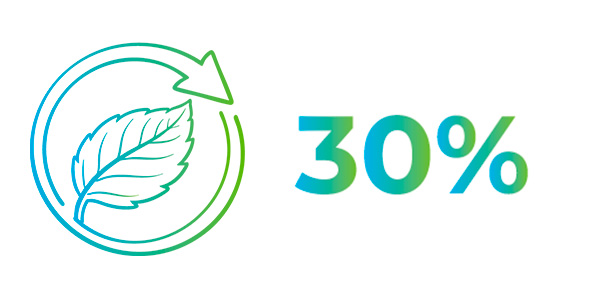
Average Scope 3 Absolute Emissions reduction required by 2030 to meet Net Zero[1]

more land is required if palm is replaced by other virgin crops[2-6]
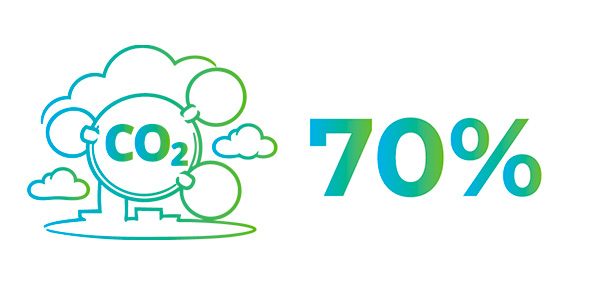
Petro-based intermediates can impact significantly a surfactants’ carbon footprint[3]
Not all biosurfactants are inherently more sustainable. Those produced from virgin feedstocks can exhibit carbon footprints comparable to synthetic surfactants. A meaningful environmental advantage is only achieved when waste-based feedstocks are incorporated into the manufacturing process, enabling a demonstrably improved sustainability profile.
Our offer enables customers to showcase credible sustainability claims:
Glycolipids biosurfactant for Personal Care formulations. Delivers gentle cleansing and a smooth skin feel.
Glycolipids biosurfactant for Home and Industrial cleaning. Provides powerful degreasing and surface cleaning performance.
Samples are for R&D use only, not for commercial sale.

Regenyl™ is a glycolipids biosurfactant manufactured by fermentation using upcycled bio-based feedstocks. Its low toxicity profile, and compatibility with conventional surfactants, make it ideal for body lotions, liquid hand soaps, and makeup removers, where eye safety, and mildness to the skin and scalp are essential.

Revolis™ is a glycolipids biosurfactant manufactured by fermentation using upcycled bio-based feedstocks. Designed for detergency, it is well-suited for degreasers, surface cleaners, and dishwashing liquids requiring effective and reliable cleaning.
Personal Care:
Home Care:
Our commercial and technical teams support you in selecting the most effective upcycled biosurfactant system for your formulation needs in Personal Care or Home and Industrial & Institutional cleaning.
Filling out the form:
Disclaimer:
Regenyl™ and Revolis™ are available for R&D use only. Not for commercial sale.
Sources:
Sustainable sourcing is at the core of what we do.
